
BrainGate is a brain implant system developed by the bio-tech company‚ Cyber kinetics in conjunction with the Department of Neuroscience at Brown University. The development of the braingate system brain-computer interface is to enable those with severe paralysis and other neurological conditions to live more productively and independently. The computer chip, which is implanted into the brain, monitors brain activity in the patient and converts the intention of the user into computer commands.
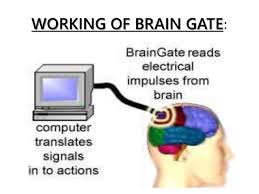
Currently, the chip uses about 100 hair-thin electrodes that sense the electro-magnetic signature of neurons firing in specific areas of the brain. The activity is translated into electrically charged signals and is then sent and decoded using a program, which can move a robotic arm, a computer cursor, or even a wheelchair.
Scientists are developing the braingate systems underlying core technology in the neuroport system to enable improved diagnosis and treatment for a number of neurological conditions, such as epilepsy and brain trauma. Braingate will be the first human device that has been designed to record, filter, and amplify multiple channels of simultaneously recorded neural activity at a very high spatial and temporal resolution.
When a person becomes paralyzed, the neural signal from the brain no longer reaches their designated site of termination. However, the brain continues to send out these signals although they do not reach their destination. It is these signals that the brain gate system picks up and they must be present in order for the system to work. It is found that people with long-standing, severe paralysis can generate signals in the area of the brain responsible for voluntary movement and these signals can be detected, recorded, routed out of the brain to a computer and converted into actions enabling a paralyzed patient to perform basic tasks. Scientists are to implant tiny computer chips in the brains of paralyzed patients which could ‘read their thoughts’.
 Site Title